
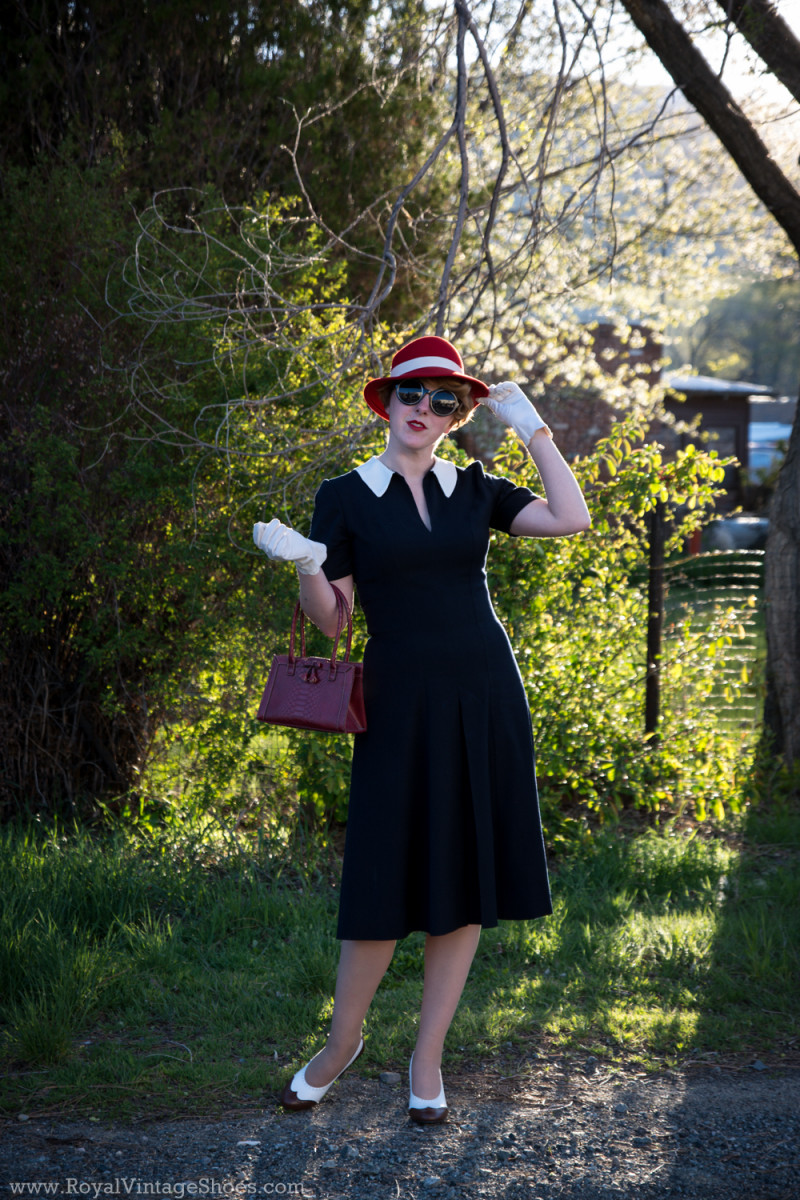
Sometimes I have a bit of a binge on vintage clothing. It usually happens in Spring or Fall, and I often laser-focus on one period. Most recently it’s been the 1940s thanks to certain popular TV shows like “Agent Carter.” So when I got a killer deal on a bundle of original 1940s patterns, I knew immediately something Peggy Carter style was in my near future.
Lucky me, when the packet of ten or so patterns arrived, there was no question which one would be perfect for the famous Agent Carter blue dress. The DuBarry 5306 pattern envelope features, you guessed it, a blue dress with a white collar, and an accompanying blazer. Perfect.
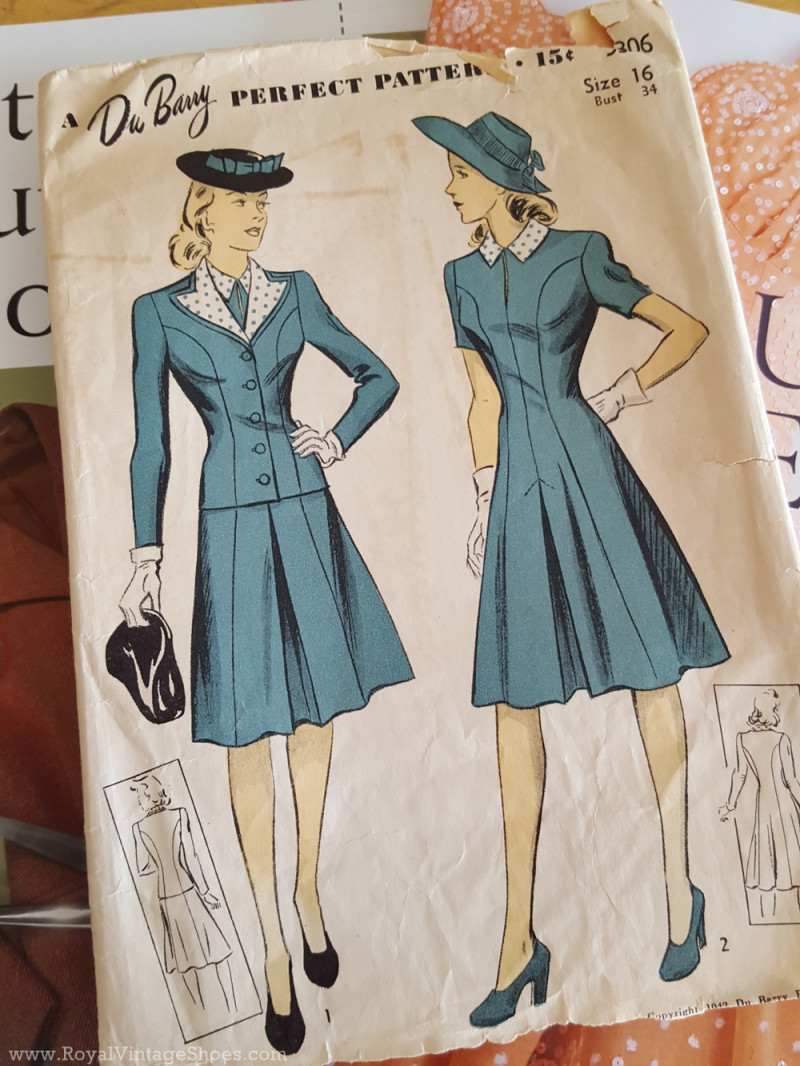
DuBarry patterns were originally printed by Simplicity Pattern Company between 1931 and 1947. My pattern is from 1942 and is an unprinted, perforated pattern, which means that cutting and fitting marks on the pattern are indicated by punched holes and notches rather than printed on the tissue itself. This can make working with original vintage patterns confusing, but you do get the hang of it – just don’t lose any pattern pieces along the way, because there’s no way to identify them!
One of my favorite things about original 1940s commercial patterns is they were very well made. The pieces go together perfectly, the sizing is accurate, and the resulting garment really does look like the pattern envelope illustration, which is rather a feat when you consider the exaggerated proportions of fashion illustrations in any era. I also have a particular love for 1940s patterns because the bust-waist ratio is realistic: my measurements are 34 bust / 28 waist, same as the Standard Body Measurements on all my 1940s patterns. However, Standard Body Measurements changed in the late 1950s / early 1960s to reflect a Standard Body Measurement of 34 bust / 26 waist, and even today modern commercial patterns expect us to have a 34 bust / 26.5 waist.
But anyway.
For this project, I chose a luscious navy wool blend from Mood Fabrics in NYC. I wanted something with structure for a blazer (my future project with the same pattern and material), but also enough drape to work for a princess seam dress. This wool had a little stretch in the weft, so I treated it like a knit, and cut all pieces so the stretch would work across and around my body.
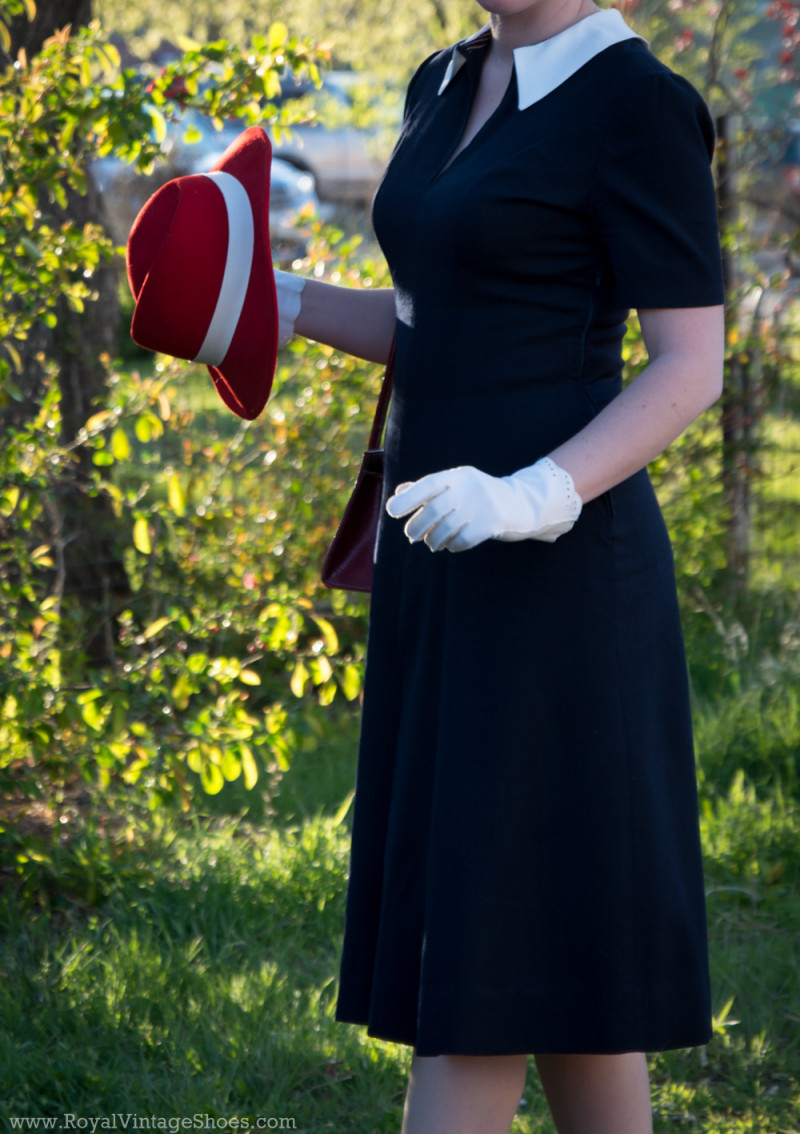
After a quick muslin to test fit, I basted all seven body pieces together. This allowed me to check fit but also stitch the curved princess seams on front and back more precisely. I left the side seams open and stitched the sleeves on the plane. This may not have been the best choice for this particular pattern, but in general I prefer it for the ease of then fitting through the side seams.
The biggest trouble I had was with the side zipper. I know it’s period accurate and all, but side zips and I just don’t get along. The curved side seams in combination with the weftwise stretch was frustrating to say the least. Zipper stitched on, zipper ripped out, stitched, ripped, rinse repeat. I ended up fitting it on the dress form and just smoothing and pinning however was needed to get everything to lay right. In the end I won.
The last bits of finishing were to apply the collar and turn up the hem. The collar is rayon, stitched on and finished on the interior with a bit of silk bias. This is where I got the opportunity to apply the little “Made with Mood” fabric tag that came with my order. This brought me untold joy, having never stitched any kind of label into my clothes. I felt super pro.
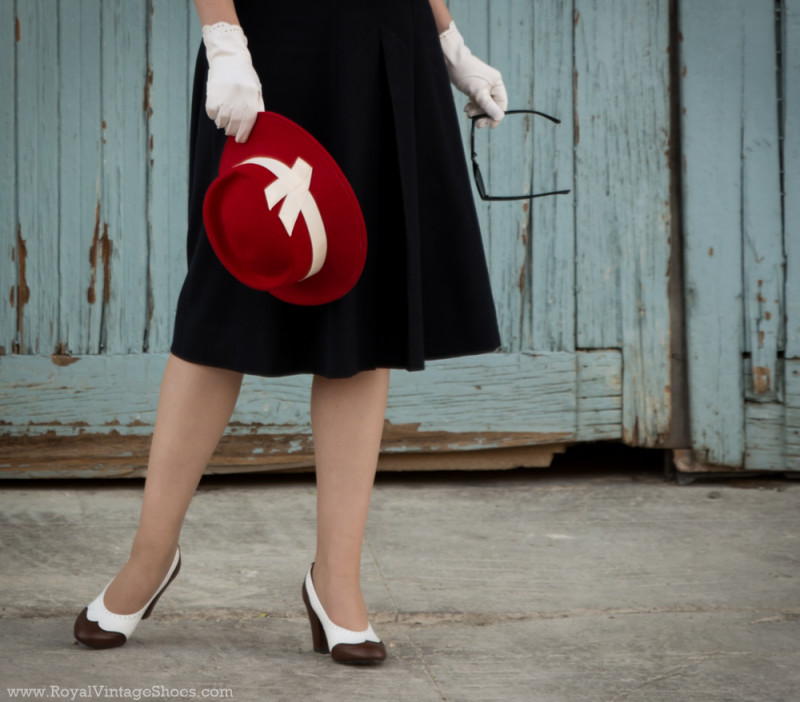
The hem I turned up with rayon seam binding, a nice vintage touch that gives a lightweight but stable hem. It’s a great material for deep hems on A-line or flared skirts, as it’s easy to gather slightly and press down smooth to get fullness to fit. The gathering, pressing, and hemming with tiny hand stitches is time consuming, but looks great in the end, and is one of the major noticeable differences in vintage clothing versus modern.
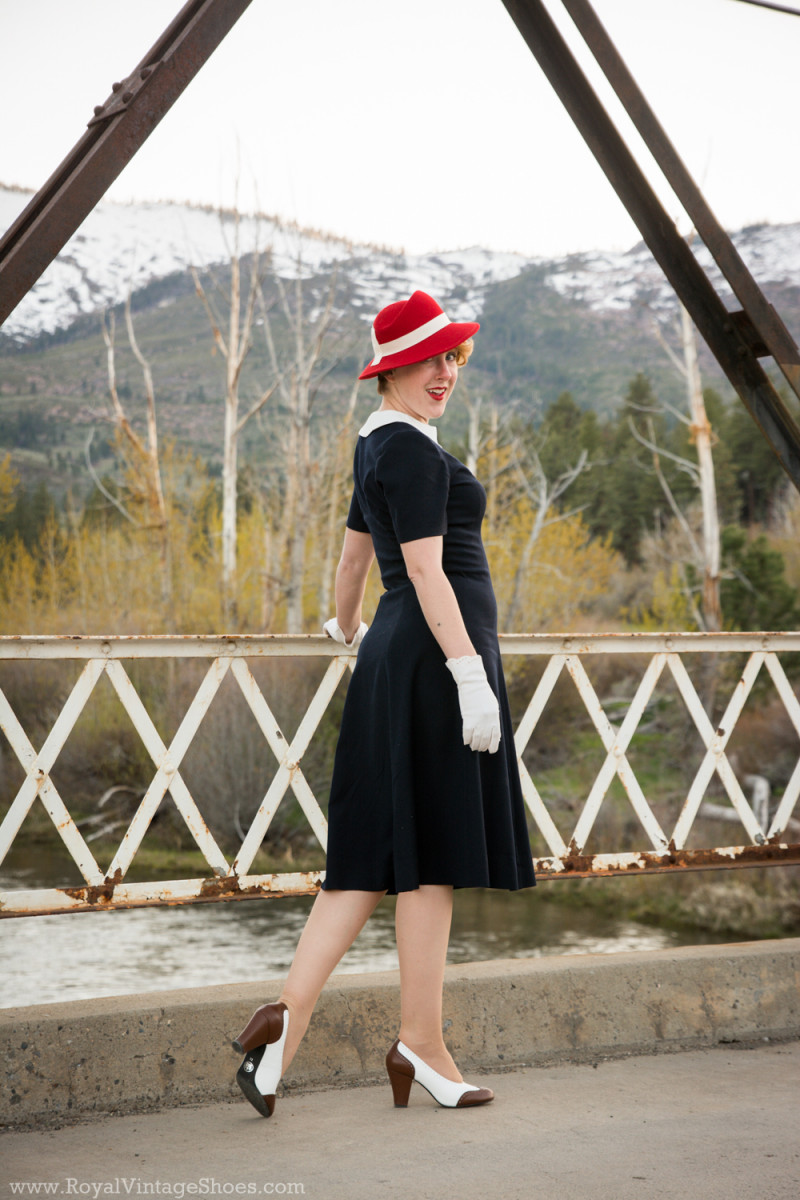
All-in-all I’m extremely happy with this dress, even if it requires specific underpinnings to wear. It’s very business-like and looks sharp paired with a blazer to make a suit, or just on its own. And, of course, with a certain red hat it is instantly reminiscent of Agent Carter. What better for 1940s cosplay than your outfit made from an original 1940s pattern?
About Lauren
Lauren Stowell is a historical costumer and vintage fashion enthusiast. She designs and sells women’s historic reproduction shoes from the 16th century through the 1940s under her independent labels American Duchess and Royal Vintage Shoes. Lauren explores the everyday lives of women of the past through making and wearing the underpinnings, gowns, and accessories from various historical periods, to understand how culture, technology, and women’s rights were affected and effected by fashion.

Do you make Duchess Kate dresses?
its gorgeous!
Lauren, This dress is lovely. Thanks for sharing your vintage pattern and sewing skills.